
Fiscal Germany scores an own goal
The year is 2014. Dortmund and Gladbach are meeting for a November match in the Bundesliga. The score is 0:0 in the 57th minute, when Gladbach player and freshly crowned World Champion Christoph Kramer receives the ball midfield and passes it back towards his own goalkeeper. Except he missed the keeper by a mile and scored a spectacular own goal instead. The German government managed to do something quite similar when it contrived to oust a highly respected economics professor from the Council of Economic Experts earlier this month.
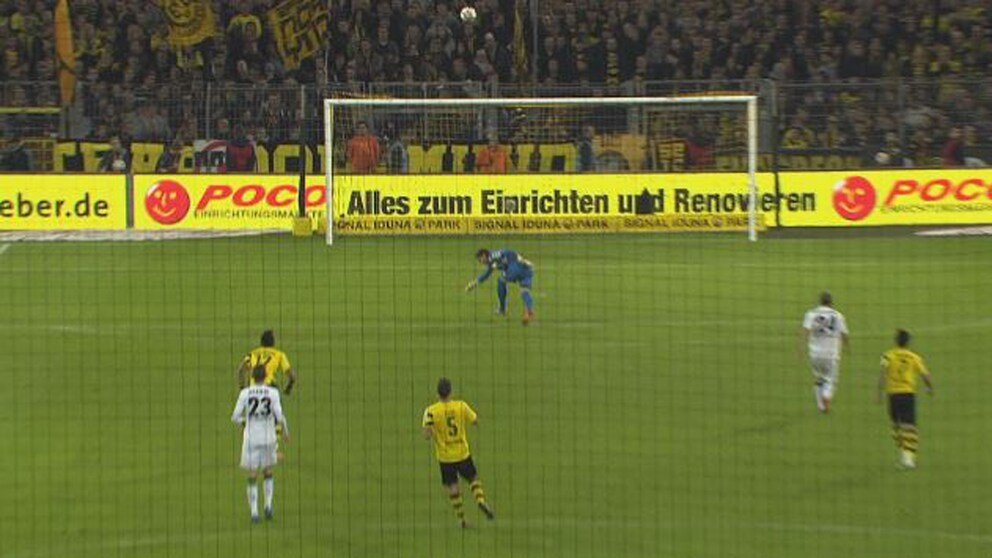
Oops!
The council (the much catchier German name is Sachverständigenrat zur Begutachtung der gesamtwirtschaftlichen Entwicklung, or SVR for short) is an independent fiscal institution tasked with providing regular assessments of the state of the German economy, including its own macroeconomic forecasts. It is part of the broader architecture of independent and autonomous bodies that facilitate intergovernmental fiscal coordination and macroeconomic policymaking. It consists of five member experts (the “five sages”), who are appointed to renewable five-year terms, and is supported by a small staff secretariat.
Over the 50-odd years of its existence, the prominence of the SVR has come to rest as much on its formal mandate as its informal influence. Its main tool is the annual review, a book length assessment that contains both the recurring economic update and forecasts and a set of substantive chapters. These are completely at the discretion of the council. The annual review (coming out in November), as well as the spring update (May) are timed to help shape upcoming official forecasts, budget decisions, and policy debates in the annual budget cycle. While the nuanced analysis of its reviews doesn’t usually break through into mainstream news, its role in the fiscal architecture is important, and members of the council can be quite influential.
The appointments to the SVR are a marvel of German administrative and political tradition. The SVR’s mandate is codified in its own law, including how government appoints members of the council. Appointments are proposed by the economy ministry and approved by cabinet. By tradition, one each of the five “tickets” is reserved for a candidate proposed by the unions and the employers’ associations, respectively. Prospective members need to have academic expertise in economics and be independent of the government (including the civil service), unions, or employers’ associations. The only exceptions to the civil service prohibition are employment by universities or research institutes. In other words, candidates may be close to this or that stakeholder, but they still have to be career researchers.
Formally, members are only required to be expert (academic) economists. In practice, they usually belong to one of the two schools of thought that have dominated the policy end of the German economics profession. They are either “(neo-)Keynesian”, or “ordo-liberal[i]”. Over the years, the SVR has leaned ordo-liberal, but the balance between the two camps has flipped back and forth. Unsurprisingly, stakeholders track quite closely whether a seat, once vacated, is filled with a candidate of a similar flavor or not. Still, the reports are usually consensus documents, and if the two camps can agree on something, then that’s likely to reflect a broad consensus among economists and even find appeal across the political spectrum.
The current fracas goes back all the way to the not-so-distant past of 2021-2025. During the previous government, the so-called traffic light coalition of social democrats, liberals, and greens, the Green Party held the economy ministry (a first). Over this period, the government appointed a new member to the employers’ seat and reappointed four sitting members to second terms[ii]. It has been customary for members to be reappointed for a second term (though only very rarely for a third). The economy ministry also had one open seat to fill, with a partial term of 3.5 years until February 2026.
In an unusual move, they picked somebody who wasn’t a member of either camp, and who wasn’t even based at a German university. Ulrike Malmendier is a professor at UC Berkeley and has spent most of her academic career in the US. She’s also one of the most-cited German economists worldwide. Academic profile alone isn’t everything, but it is notable that her citation count exceeds that of the other four members combined – several times over. The appointment was considered quite the get at the time. Economy minister Robert Habeck explicitly noted that this was the first time that a “professor of global renown teaching at a leading US university could be persuaded to join the SVR”.
What about the own goal then? Following the 2025 election, the economy ministry passed from the Greens to the conservative CDU. Not an unusual constellation, the ministry had been CDU-held quite recently during the first and fourth Merkel cabinets. However, instead of extending Malmendier’s tenure by reappointing her to her first full five-year term, she was told on her last day in post that her services were no longer required. Several reasons were floated in the press: the SVR as a whole is not ordo-liberal enough, that more expertise in geo-economics is required, or simply, “we didn’t appoint her”.
There are two reasons why this is an own goal for fiscal Germany. First is the norm erosion. This is the first time a member was denied a second term. The norm had been that once on the council, members were reappointed once, and sometimes twice, irrespective of who made the initial appointment. Malmendier’s predecessor, Lars Feld, had been blocked from a third term in 2022. Instead of marking the return to normal this year, the erosion continues. It’s important to note that the SVR is not an advisory body, as the term is understood in Germany. Both the finance and the economy ministry have advisory bodies, whose members are appointed by the minister of the day (more like the Council of Economic Advisers in the US). In contrast, the SVR is supposed to be more like the weather service. The forecasts and reports are there for anyone to use, not to reinforce the messaging of the government.
Second, the current decision has very effectively salted the earth for any outside economists, especially those working abroad. It should be obvious that taking part-time appointments to an independent policy body is not how academic economists make their careers. It takes up a huge chunk of time that could be spent doing research. 50 years ago, one might have said, no matter. The government is just down the road from the best German universities and anyone who wants to dip their toes into the policy world can do so easily, especially with the economic research institutes providing an effective middle ground. But today the discipline is global. It would be counterproductive to only look for expertise in Germany, when there are plenty of German-speakers at the world’s best universities (and yes, sorry, that means looking abroad). Trying to persuade the next superstar who happens to be based at Science Po, Oxford, or Yale, just became much harder.
Historically, the current setup was well suited for Germany’s two-major-parties political system. Sure, members were usually from either the Keynesian or the ordo-liberal camps, but they needed to find ways to settle on a consensus view, however imperfect. The SVR’s outputs not only feed into the national policy debate, but are also meant for the 16 state governments, where invariably many different flavors of coalition hold office. This is much more the case in today’s 5+ party system. A future in which economy ministers try to stack the SVR with their allies will further undermine its legitimacy and also tarnish the reputations of the appointees.
What could be done to repair the damage? There is an underlying issue here that goes beyond individual ministers and experts. The shift from a two-major to a multiparty coalition system seems to be here to stay. The old shortcut to line up Keynesians and Ordoliberals now seems doubly outdated. It doesn’t reflect the global economics discipline, and it doesn’t align with the party system anymore. Instead, why not give the initiative of proposing future members to the council itself? They, or some panel that also includes government representatives could fill open seats. And better still, if changes to the SVR’s mandate are on the table, it should be made stronger, not weaker. There are plenty of independent fiscal institutions in the OECD better empowered to second-guess the government’s fiscal plans.
Christoph Kramer, being a world-class footballer, immediately realized he had make a mistake as his foot touched the ball[iii]. There’s still a chance that this fiscal institutions own goal triggers a useful round of reflection in Berlin.
[i] Dissertations could and no doubt have been written about whether Keynesians are always of the left and ordoliberals of the right, whether ordoliberals are really all that different anymore from neo-liberals, whether all this is the same as demand-side vs supply-side, or pro vs anti public spending. The short answer is that yes, all these elements matter a bit, but it’s also more complicated than that and thankfully, the nuances don’t matter for the issue at hand.
[ii] One of whom was reappointed to a first full term after having finished up the final six months of his predecessor’s term.
[iii] “As soon as I hit it, I thought: ‘Oh shit.’”